Tommi Svensk, who heads Patria’s Protected Mobility business, encouraged companies to seize the opportunities that Europe’s rapidly growing defence procurement market offers to Finnish SMEs. This growth is reflected in Patria’s turnover, which has more than doubled since 2020 and exceeded the one-billion-euro mark last year. The main driver of the company’s growth is, in particular, Patria’s 6x6 armoured vehicle, around which the multinational CAVS project has expanded to several European countries. Participants include, amongst others, Latvia, Germany, Sweden, Denmark and Norway.
- Defence spending in EU countries is estimated to have totalled around 381 billion euros last year, and the growth still to come is absolutely massive. Europe has neglected its preparedness in the past, and is now investing in it. We need to be part of this, and Patria is firmly involved. From a preparedness perspective, it is an extremely positive development that Europe is centralising its procurement. What could be more sensible than everyone having the same core equipment, which, amongst other things, makes it easier to train troops, said Tommi Svensk.
This growth is evident in Patria’s subcontractor network. The company has utilised all its available in-house production capacity and is strengthening its delivery capabilities with the help of its partners. For example, the collaboration launched with Valmet Automotive is increasing vehicle production capacity. Patria has significantly deepened its collaboration with Etteplan by establishing a new joint centre of excellence focused on the defence industry. Technology transfer is a key part of Patria’s business model. Through this, Patria transfers, for example, its maintenance and development expertise relating to armoured vehicles to the local industry or partners in the target country.
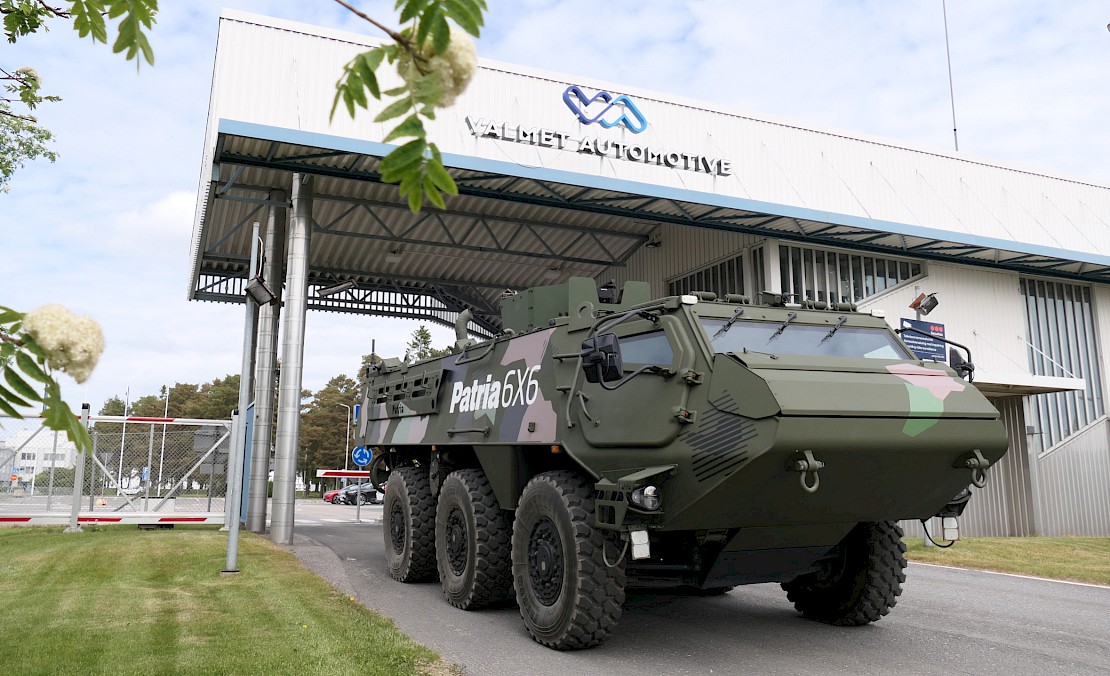
Production of Patria’s 6x6 vehicles is set to begin at Valmet Automotive’s Uusikaupunki plant. Photo: Patria.
- For our supplier network, technology transfer has opened up significant new opportunities, as suppliers have been able to enter the new target country directly to supply goods and establish their own business relationships. The rest is down to the market economy; it comes down to whether the supplier has the necessary capabilities and whether, for example, quality, delivery reliability and cost competitiveness are up to standard,” said Svensk, explaining the benefits of technology transfer for subcontractors.
- When a company is seeking to become a supplier to international markets, domestic references are extremely important. When talking about the defence equipment industry, it is worth remembering that this does not necessarily mean combat vehicles. The concrete elements mentioned here were a good example, and a large part of the manufacture of armoured vehicles, too, falls within the scope of the standard heavy metal industry.
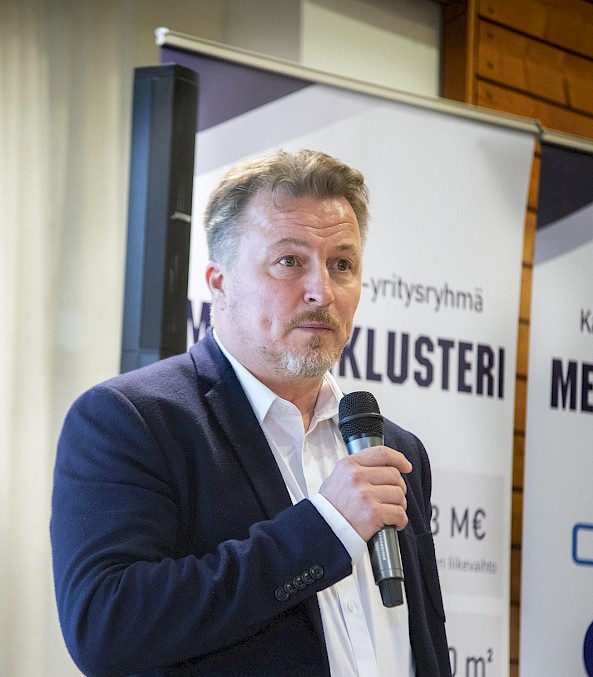
‘Technology transfer to our supplier network has significantly opened up new opportunities,’ emphasised Tommi Svensk of Patria.
Wärtsilä values innovative partnerships
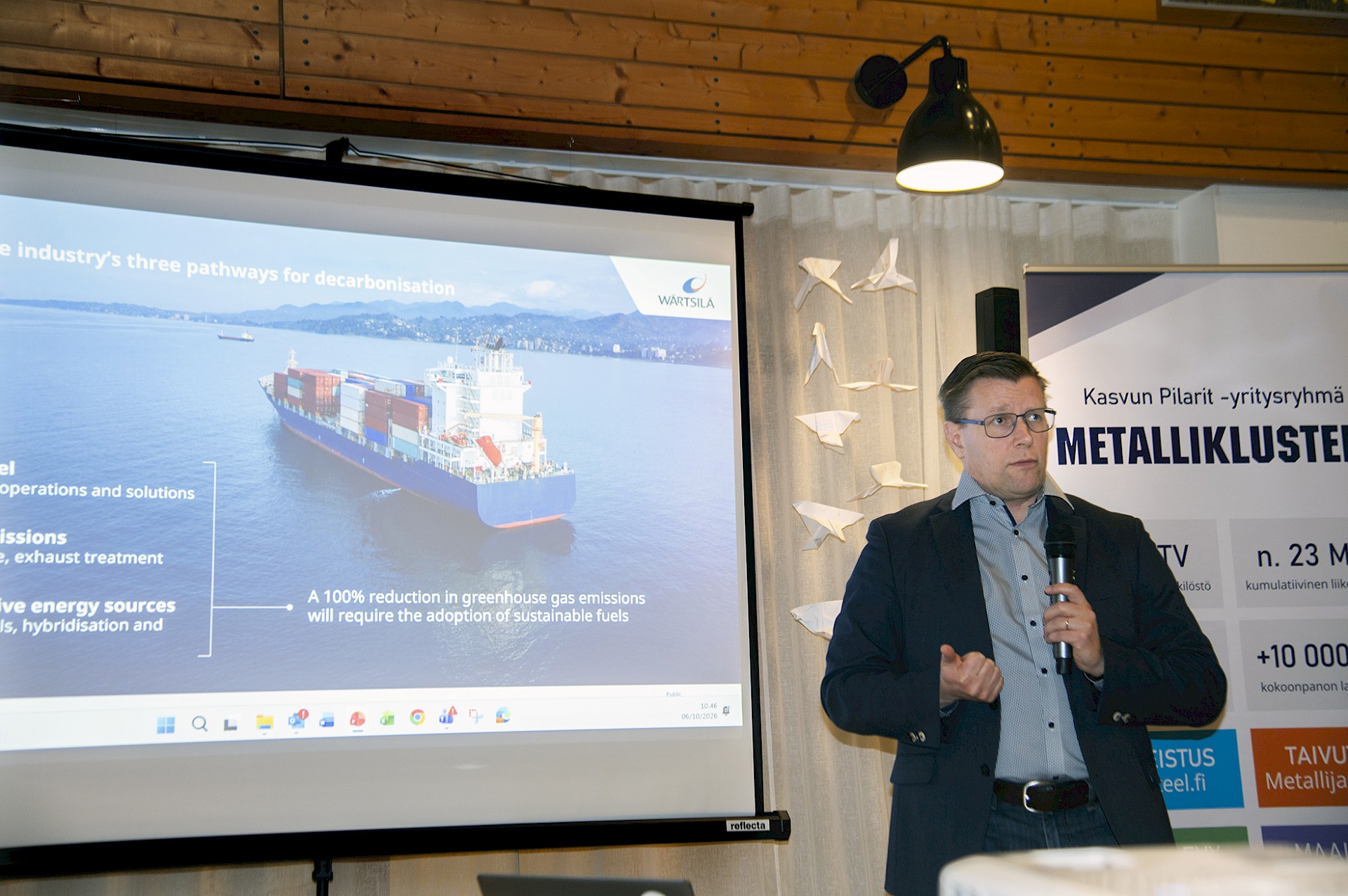
Juha Päivike, who is responsible for Wärtsilä’s supply chains and manufacturing ecosystems, encouraged companies to look boldly to the future.
- “At this event, we are discussing the outlook for Wärtsilä and Patria, but we have many other sectors where growth is beginning to take off. That is why it is important for everyone to maintain a growth-oriented mindset. When you consider not only the needs of our two companies but also the industrial investments planned for the area between Rauma and Kokkola, there will be a huge demand for subcontracting over the next five years.
‘Now is the time when your companies really need to consider their strategic direction, identify their key capabilities and then focus on developing them. If you don’t invest and grow now, you’ll fall by the wayside, Päivike emphasised. According to him, SMEs also need patience, as a new customer may not necessarily be on the doorstep today or tomorrow. However, a long-term approach and a mindset of continuous improvement can be very rewarding.
- In Wärtsilä’s case, we can achieve great things together when a subcontractor combines innovation with its capabilities. We are increasingly interested in how we can collaborate with our partners on research and design. Usually, things get off to a slow start whilst we’re carrying out test series and so on, but once we reach the contract stage with a supplier, we’ve generally built up quite long-standing partnerships. At the same time, this often opens up opportunities elsewhere in the world as well, said Juha Päivike. Wärtsilä manufactures solutions and equipment for the maritime and energy sectors. At the heart of the company’s operations is the green transition, which involves, for example, enabling low-carbon shipping and carbon-neutral energy systems.
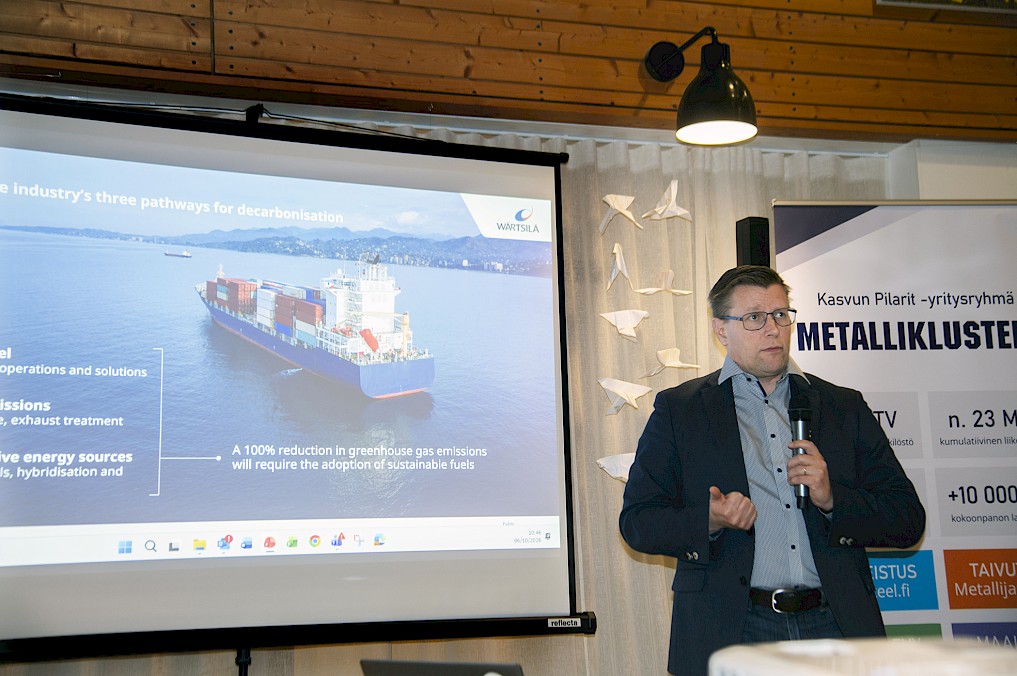
According to Juha Päivike, Wärtsilä aims to build long-term partnerships with its subcontractors.
The metal cluster creates the capacity to respond to major projects by Patria and Wärtsilä
- Through ‘ Suurhanketoimisto’, major projects in the region have generated work for over 50 companies in the Kaustinen sub-region.
- Patria’s 6x6 project is one of these major projects, explains Markus Mäntynen, project manager for the ‘Pillars of Growth’ business group initiative. As individual companies do not have sufficient resources to tackle larger-scale projects, we have created the Metal Cluster to meet the needs of Patria and Wärtsilä. The Metal Cluster brings together four of the strongest players in their respective regions and sectors: Metalli Järvelä from Kaustinen, a specialist in 3D laser cutting; Onsteel from Karstula, a medium-sized engineering workshop; Maarla from Viitasaari, known for its sheet metal production; and VTmaalaus from Vimpeli, an expert in powder coating.
- No matter how good a company may be, a single SME would be overwhelmed by requests for quotations from firms such as Patria and Wärtsilä. The scale of the projects being launched is such that simply responding to calls for tenders requires months of work by several people. Furthermore, calls for tenders are increasingly requiring compliance with the NATO AQAP 2110 standard, says Markus.
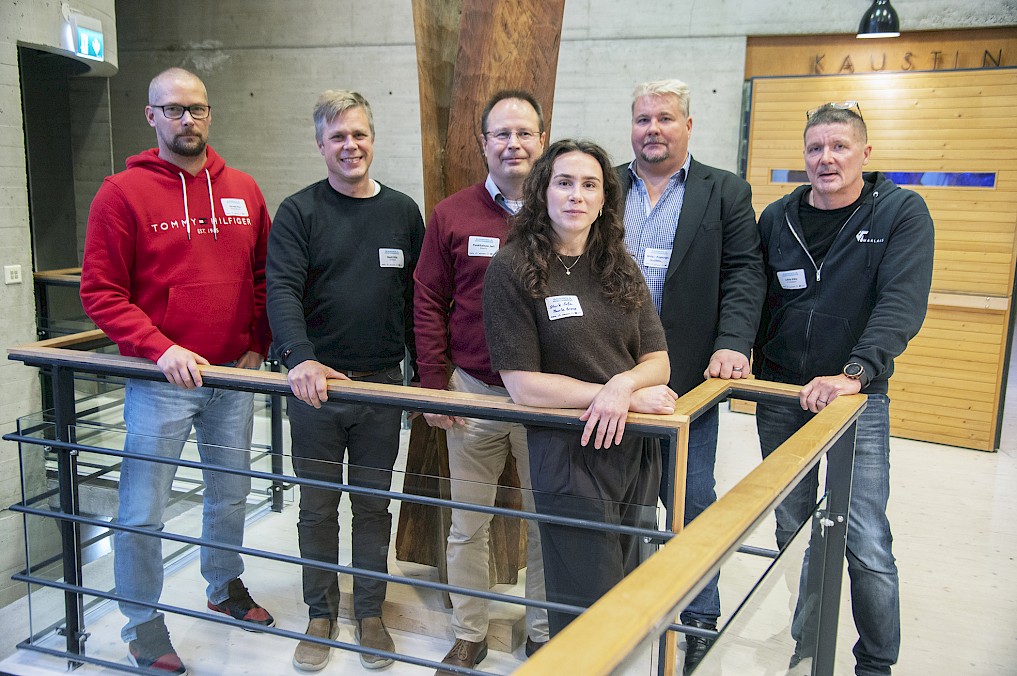
The capabilities of the companies in the metal cluster complement one another. Their combined turnover exceeds 23 million euros, they employ 175 staff and have a production area of 23,500 square metres. There is expansion capacity of 10,000 square metres. From left: Visa Järvelä (Metalli Järvelä), Ville Rosti (Onsteel), Jari Puukilainen (Maarla), Sofia Stark (Maarla), Harri Piispanen (Onsteel) and Riku Lehto (VTmaalaus).
“SMEs need each other as partners”
Issues relating to subcontracting and security of supply attracted SMEs to Kaustinen from regions other than the Ostrobothnian provinces and Central Finland. Managing Director Teemu Vastamäki represented Control Express Finland Oy, based in Savonlinna. The company specialises in the mechanical design and contract manufacturing of sheet metal products for industry. The company, which has been in business for over 30 years, employs 33 people and has a turnover of just over 5 million euros.
- Our customers are in Finland, but the market for our products is global. Like many other SMEs, we rely on exports. “I am here to present our operations to both Patria and Wärtsilä, as I believe we have the capabilities and expertise to assist both companies,” said Vastamäki. As examples, the CEO cited sub-assemblies for the energy sector and, amongst other things, sheet metal parts and components for the defence industry, such as for vehicle production.
- It is difficult for an SME like ours to secure large contracts on its own, so we need partners. Here in Eastern Finland, we have Savo Defence, through which we aim to attract the interest of large companies, and it was through Savo Defence that I learnt about this event. What really stuck in my mind from the presentations by Patria and Wärtsilä was how they encouraged SMEs to invest and to take bold steps forward, said Vastamäki.
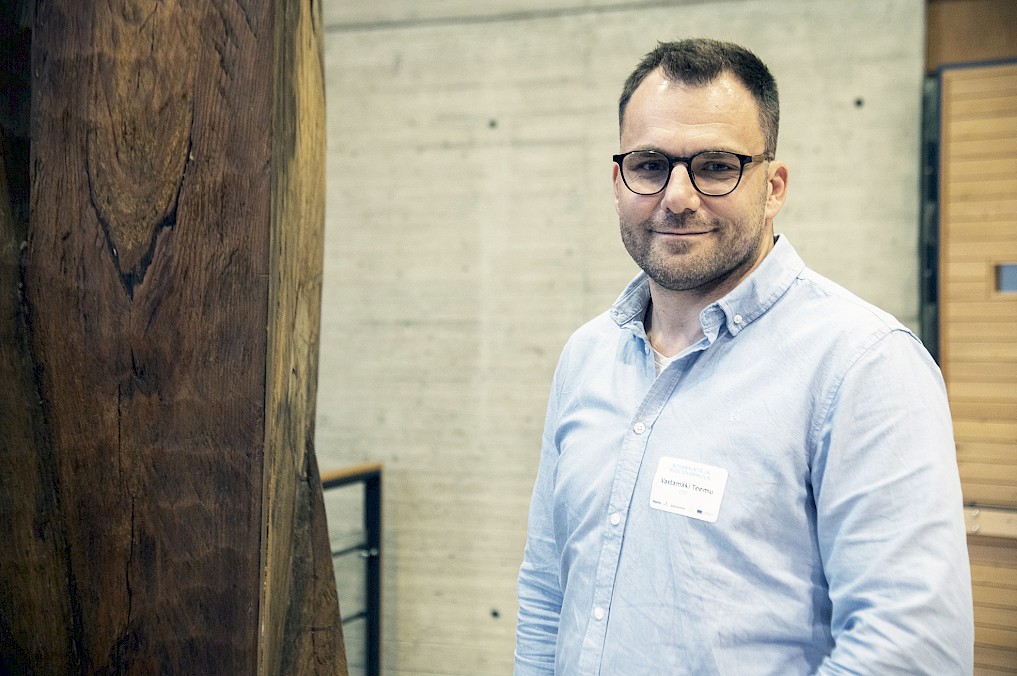
According to Teemu Vastamäki, Managing Director of Control Express Finland, SMEs need partnerships to secure large contracts.
“This event of ours in Kaustinen was a national one,” says Markus. He was responsible for coordinating the event. The networking event featured four concurrent tracks: pitch sessions organised by Patria, Wärtsilä and the Metal Cluster, as well as a joint workshop between the National Emergency Supply Agency and representatives from the construction industry. A total of 44 business-to-business pitch sessions were coordinated throughout the day. The companies invited to the event met with representatives from Patria and Wärtsilä, as well as from the Metal Cluster. “There could have been even more attendees – twice as many,” says Mäntynen, highlighting the great popularity of the matchmaking event. Organising the event required five months of preparation, and a total of 17 people were involved in the arrangements on site.
- The event was a fine demonstration of the expertise of the Kaustinen region. Our partners brought companies to the event from their own sectors. In addition to Savo Defence, we collaborated with the JPYP, Härmä and Seinäjoki regions in line with the day’s theme. Our thanks go to both our staff and all our partners,’ says Mäntynen.
From the Kaustinen region, alongside Metalli Järvelä, Aurolahti Group and Kovasat also gave presentations. Running concurrently with the matchmaking event was a workshop organised by the Security of Supply Centre and led by Erkki Laide, which saw broad participation from the construction industry along Route 13.
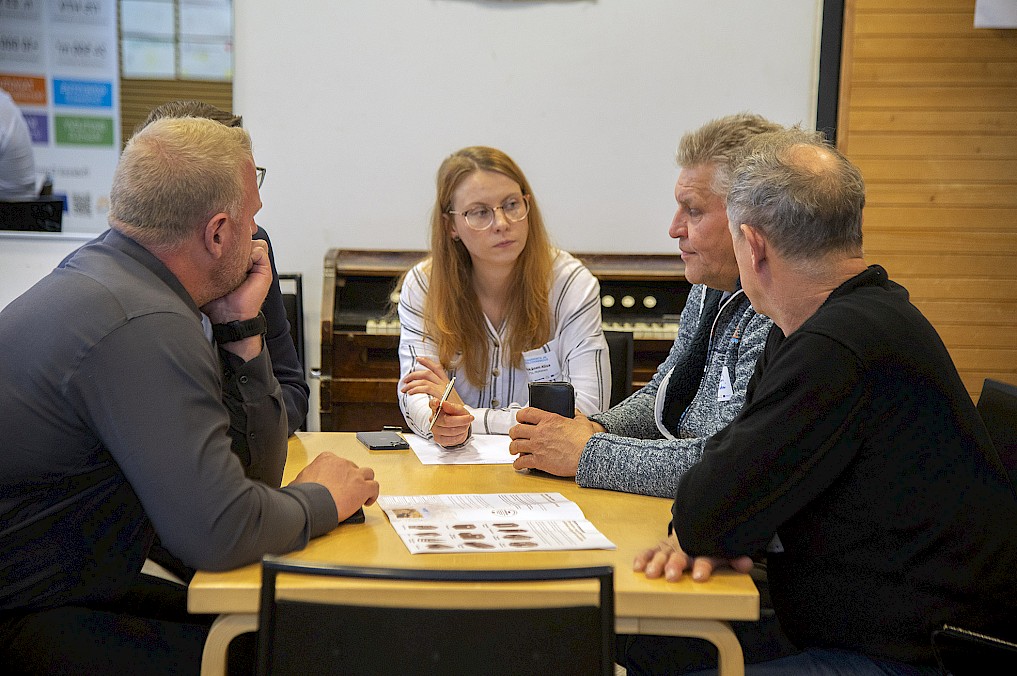
The workshop organised by the National Emergency Supply Centre and the construction industry was attended by representatives from the construction sector. Centre: Alisa Nykänen (PSL Nykänen) and Sakari Klemola (Klemolan Betoni).
For the Kaustinen region, 6 October was ‘Super Tuesday’ for seminars. At the same time as the ‘Subcontracting and Security of Supply’ network event, the Kaustinen region organised the final seminar of the Biogas Clinic, and in the evening there was an open public forum on the impacts of major projects at the Kaustinen Folk Art Centre, with the theme ‘feel free to speak’.
- “It’s a model worth following,” says Markus Mäntynen at the end of the interview, expressing his satisfaction with the success of the event as a whole.
The ‘Subcontracting and Security of Supply’ network event was held at the Kaustinen Folk Art Centre on 6 October 2026. The event was organised by the Kaustinen region’s ‘Pillars of Growth’ business group project, with Markus Mäntynen serving as project manager. The project is funded by the Vitality Centres of three regions – Ostrobothnia, South Ostrobothnia and Central Finland – as well as the participating businesses. The project receives no municipal funding.