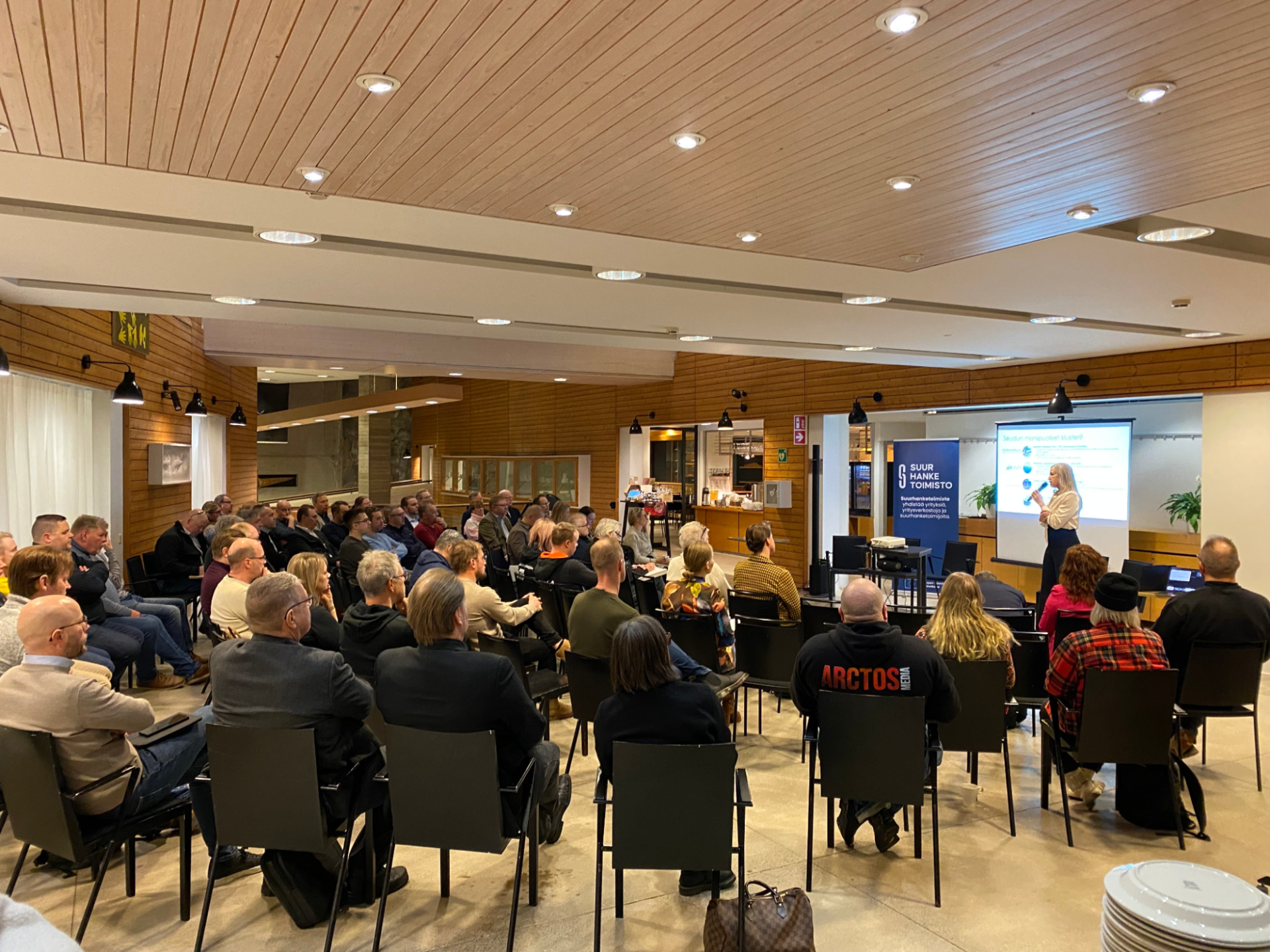
Major projects offer significant opportunities for subcontracting companies also in the future, it was stated at a seminar on the opportunities of major projects for subcontracting companies organised by SEMUKAS in Kaustinen on 10.2.2026. The second panel discussion of the day highlighted cross-border cooperation and a common vision of the actors in the region, which were recalled as basic prerequisites for the success of major projects.
The importance of cooperation and a common vision was stressed by Paula Erkkilä, CEO of the Ostrobothnian Chamber of Commerce, among others.
- It is extremely important that we have pretty much a common vision. When we go to different tables to negotiate, we must not have different messages if we really want to move things forward. For example, the decision-makers in the capital region don't know what we want if we don't know it ourselves," she said.
According to Erkkilä, we need a common vision and a clear communication.
- We are too jealous of our limits. We should get over them, because others are not interested in them. Let's not make municipal, regional and sub-regional borders walls for us, because we have exceptionally good prospects for growth. Working together is not really rocket science.
Accessibility and skills were also important from the point of view of major projects.
- Accessibility and skills are key factors in determining where projects find a home. We need to be proactive in identifying skills needs.
Like Erkkilä, Anna Kotamäki, Managing Director of Central Ostrobothnian Entrepreneurs, pointed out that the companies and entrepreneurs in her organisation, for example, have no regional borders. When you cooperate on a large scale, it increases networks, and from there new opportunities open up again.
Arctial would be a massive mega-projectif it were implemented
Daniela Mårtenson, CEO of Concordia, a development company in the Pietarsaari region, saw opportunities for cooperation in areas such as labour and regional marketing. She said she had noticed that many local young people are keen to move back to their home region after their studies.
- If, for example, Arctial's project to produce low-carbon aluminium comes to fruition, we will have to find housing solutions together, for example. If Arctial goes ahead, the further development of aluminium will then be an interesting topic for all of us in the region.
The Arctial project is backed by ABB, Fortum, Mitsubishi Corporation, Rio Tinto, Siemens Financial Services, Tesi and Vargas. The production project will be located in Kokkola and Kruunupyyhi and aims to produce more than 600 000 tonnes of low-carbon aluminium per year.
- The construction phase would take three years, with a maximum labour requirement of 3 000 to 4 000 people. During the production phase, around 1 200 direct jobs would be created, and in the service network the project would employ around three times as many people as the direct jobs," Jöran Sopo, local manager of the Arctial project company, told the seminar audience. He also highlighted the importance of cooperation.
- It is important for SMEs that want to get involved in the project to be visible, market themselves and register. It is also important to network and create different groupings. Small businesses should form alliances with each other, because in big projects the big ones want to succeed simply because they have the mass," he continued.
If the Arctial project progresses to the final study stage, the investment decision is expected to be made in early 2027. Construction would start immediately thereafter, with actual production expected to start towards the end of 2029.
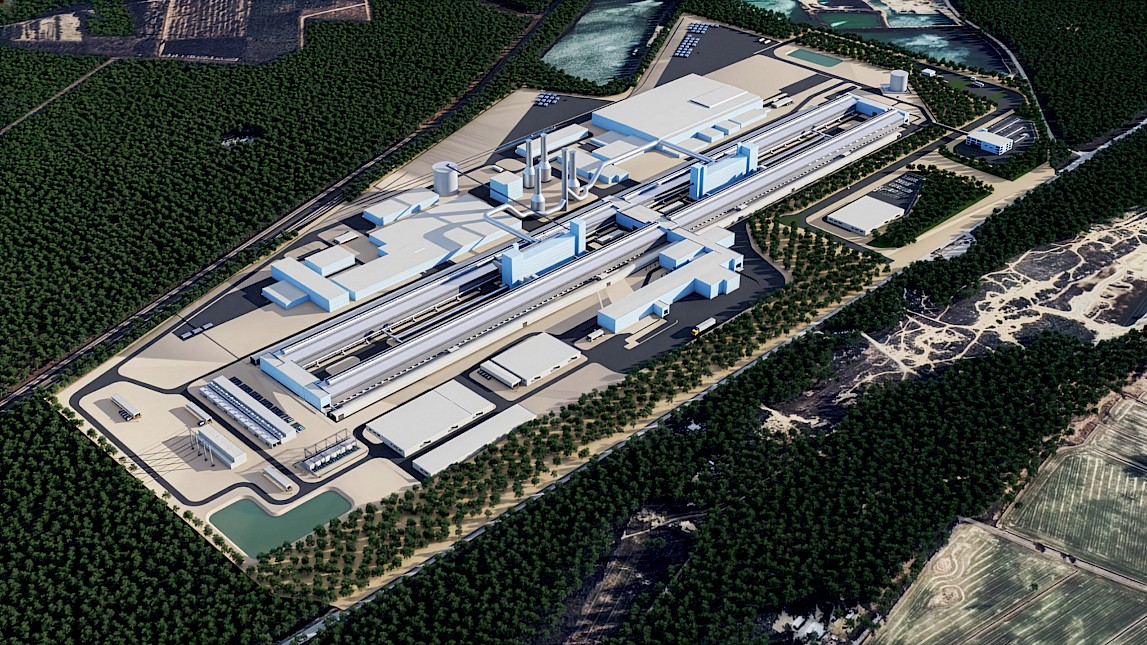
Arctial's production project will be located in Kokkola and Kruunupyyki and aims to produce more than 600 000 tonnes of low-carbon aluminium per year. Photo: Arctial
"Ideologies should not be allowed to influence permitting processes"
Hans Ahola, Chairman of the Board of Ahola Group, saw a lot of potential for large-scale projects in the future, but he was concerned about the impact of unnecessary regulation and bureaucracy on the investment environment.
- For SMEs to get involved in subcontracting networks, they need to be on the move early and actively establish contacts. Finnish companies have a lot to learn from Swedish companies when it comes to networking. A regionally excellent example is the suurhanketoimisto.fi service, which does not exist elsewhere in Finland, he said.
But the huge problem, according to Ahola, is that Finland has not seen growth for a long time, and at the same time has created the strongest public sector in Europe.
- I have tried to find out how many peripheral organisations of all kinds there are in Finland, alongside ministries. I hope that the permitting of major projects will be completed more quickly and more smoothly.
Mr Ahola was annoyed that in the permitting process, decisions can be taken according to the ideology of an official and the project falls apart.
- We cannot afford this in Finland, and we have no one to manage the big picture.
In developing the public sector, Hans Ahola would take a leaf out of the book of the Ministry of Transport's organisations (Väylävirasto, Traficom, Fintraffic), which serve as a good example for other public administrations. Ahola also highlights the Swedish model, which is very solution-oriented. As an example, he cites the Swedish government's Accelerationskontoret.se, which has a mandate in Sweden to intervene and speed up the implementation of clean transition projects if they get bogged down in permit bureaucracy.
A comprehensive assessment is needed
Markus Mäntynen, project manager for SEMUKAS-project, continued Ahola's idea by suggesting that a holistic societal cost-benefit assessment should be carried out for major projects, using the traffic-light-colour logic, which would assess the positive, neutral and negative impacts of projects in a balanced way. The current problem is that the authorising authority assesses projects solely from the point of view of negative environmental impacts. Neutral and positive criteria relating to employment, vitality and tax revenue should be added to the environmental impact. This would make it possible to analyse the overall economic and social significance of the feasibility of the project, which is currently not possible.
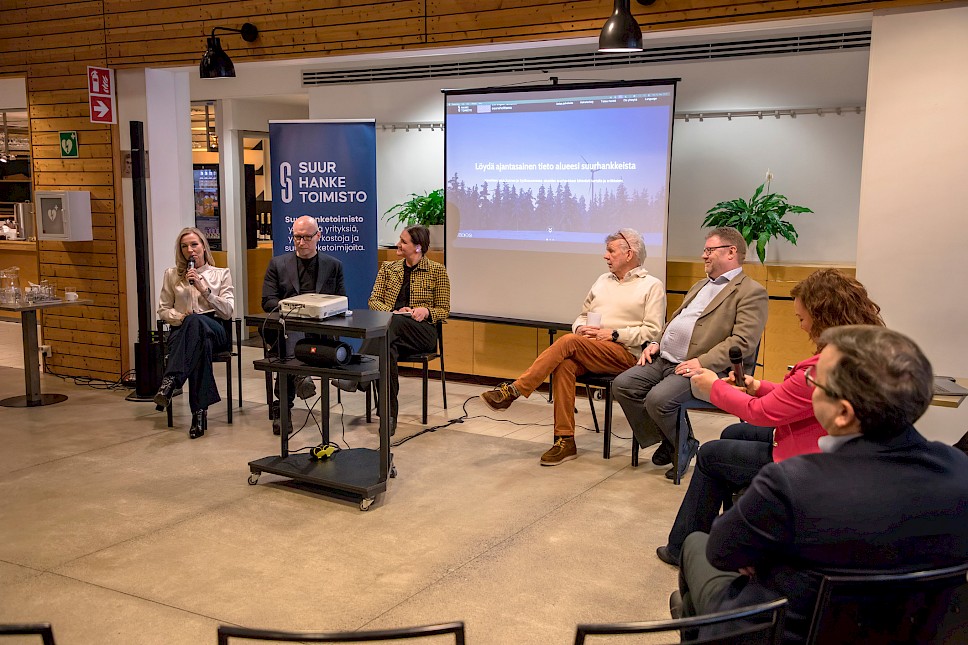
The panel discussion on the potential of major projects highlighted the importance of cooperation. The picture shows panelists Paula Erkkilä (left), Markus Mäntynen, Daniela Mårtenson, Hans Ahola and Jöran Sopo. Photo: Wegevision/Ville Viitamäki