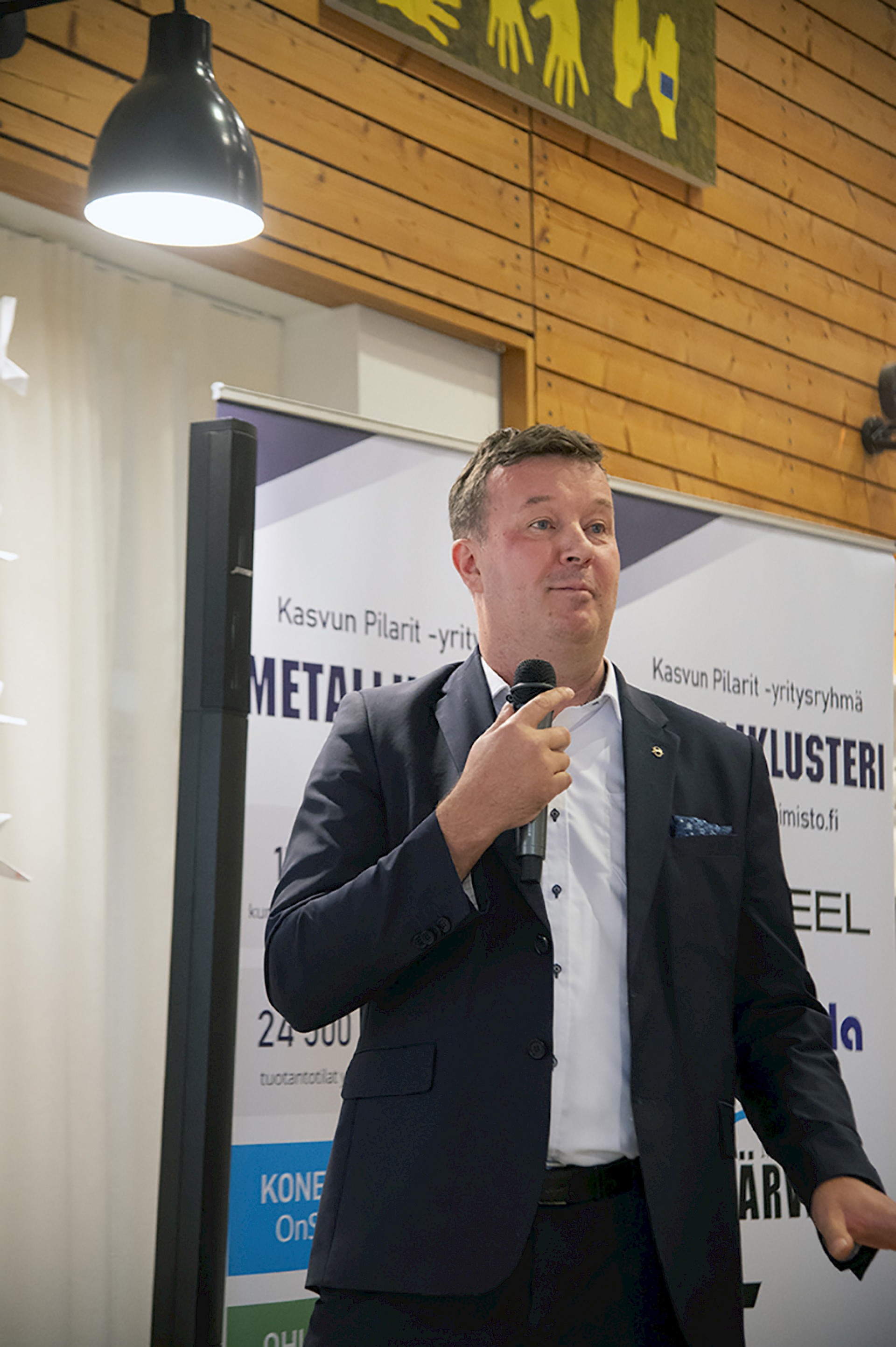
Jukkola, who chairs the Parliament’s Security of Supply Group, emphasised that Finland’s security of supply is underpinned by a strong economy. Without economic growth and competitive businesses, society’s ability to prepare for crises also weakens.
- When discussing security of supply, the focus is often on food, medicines and other essential supplies. However, the economy is the most critical factor on which Finland’s preparedness is built.
In his view, business activities related to security of supply deserve more attention than they currently receive. Investments made in preparedness strengthen companies’ expertise, employment and economic operating conditions.
- Security of supply is also a business, and there is absolutely no need to be ashamed of it. At the same time, business growth creates the buffers and expertise needed in potential crisis situations.
Networking opens doors
Janne Jukkola considered business networking to be of crucial importance, particularly for SMEs seeking to gain access to the supply chains of large industrial companies and the defence industry. He cited the example of the SCATA MK1 armoured vehicle, for which series production is due to begin in Pietarsaari. The local subcontracting network has played a key role in the company’s decision to locate in the region.
- There is also considerable export potential in the field of security of supply. Finland’s long experience of preparedness is of interest to other NATO countries, which are currently developing their own security of supply systems. Everyone comes to see for themselves and marvel at how well Finland is prepared. There’s a golden opportunity for exports there.
As a second example, Jukkola mentioned his visit to Ukraine in the spring. The Ukrainians emphasised the importance of protecting and fortifying critical infrastructure. Finland has the expertise in concrete and rock construction, amongst other things, to meet these needs. The domestic market also plays an important role in this. When Finland invests in its own expertise and technology, it simultaneously creates a track record that enables companies to target international markets.
- There should be more networking events like today’s, as these are precisely the kind of occasions where we want to provide the keys to growth.
Janne Jukkola has extensive expertise in security of supply issues, and it was on his initiative that a parliamentary working group on security of supply was established in the Finnish Parliament in the summer of 2023. Its purpose is to support Finland’s security of supply and to improve preparedness and foresight in various crisis and threat situations.
‘We have undertaken many visits to businesses and familiarised ourselves with a wide range of networks. I believe that we have been able to increase interaction between the business community and decision-makers,’ he told the audience.
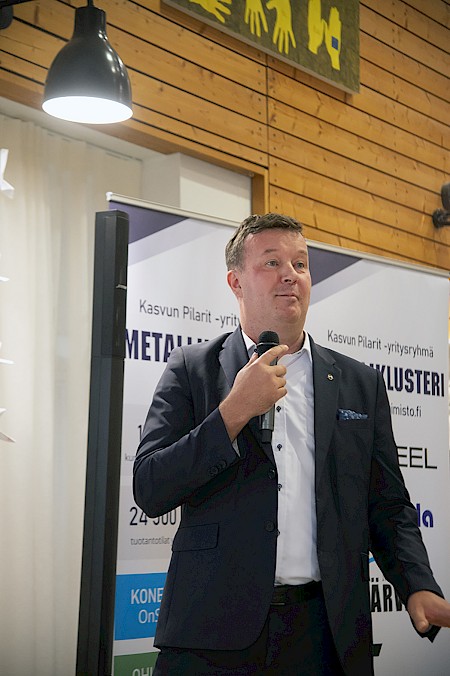
A parliamentary working group on security of supply was established in the Finnish Parliament on the initiative of MP Janne Jukkola.
Security of supply safeguards the functioning of society
During the section of the networking event dedicated to security of supply, Petri Jokilahti, a leading expert from the Central Finland Centre for Vitality, outlined the various aspects of security of supply. Finland is a pioneer in security of supply, as a system has been developed in our country over decades to safeguard society’s vital functions even during serious disruptions and states of emergency. The Security of Supply Centre acts as the coordinating body for the Finnish preparedness system. It brings together the expertise of public authorities and businesses, coordinates preparedness and manages strategic security stocks. Around 1,500 companies operate within the security of supply network. The Security of Supply Organisation comprises seven sectors, such as food supply, logistics and energy supply, which are divided into a total of around 30 sector-specific pools.
- At present, we are preparing for three threat scenarios: hybrid threats, disruptions to the global economy and supply chains, risks associated with technological development, and war. “One key aspect is strengthening self-sufficiency and reducing dependencies in a situation where 90 per cent of goods arriving in Finland from abroad come by ship,” Jokilahti explained.
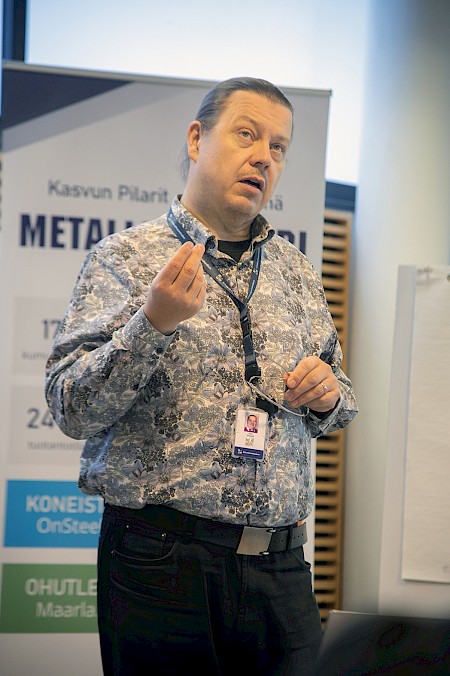
Finland is currently preparing for three threat scenarios, said Petri Jokilahti, a leading expert.
The role of the Port of Kokkola in safeguarding security of supply
Anssi Martinmäki, Commercial Manager at Kokkola Port Ltd, spoke about the Port of Kokkola’s role in safeguarding security of supply. Finally, in a workshop led by Erkki Laide, participants considered what the SMEs present could jointly offer the Finnish Defence Forces and what types of goods the Port of Kokkola could handle.
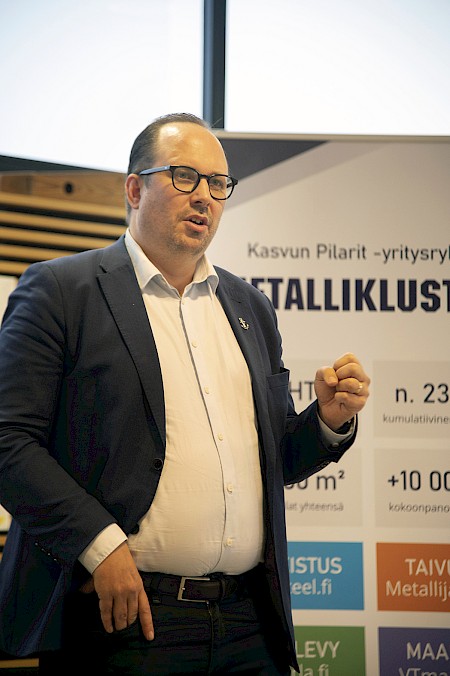
Anssi Martinmäki, Commercial Manager at the Port of Kokkola, gave a presentation on the Port of Kokkola and its role in ensuring security of supply.
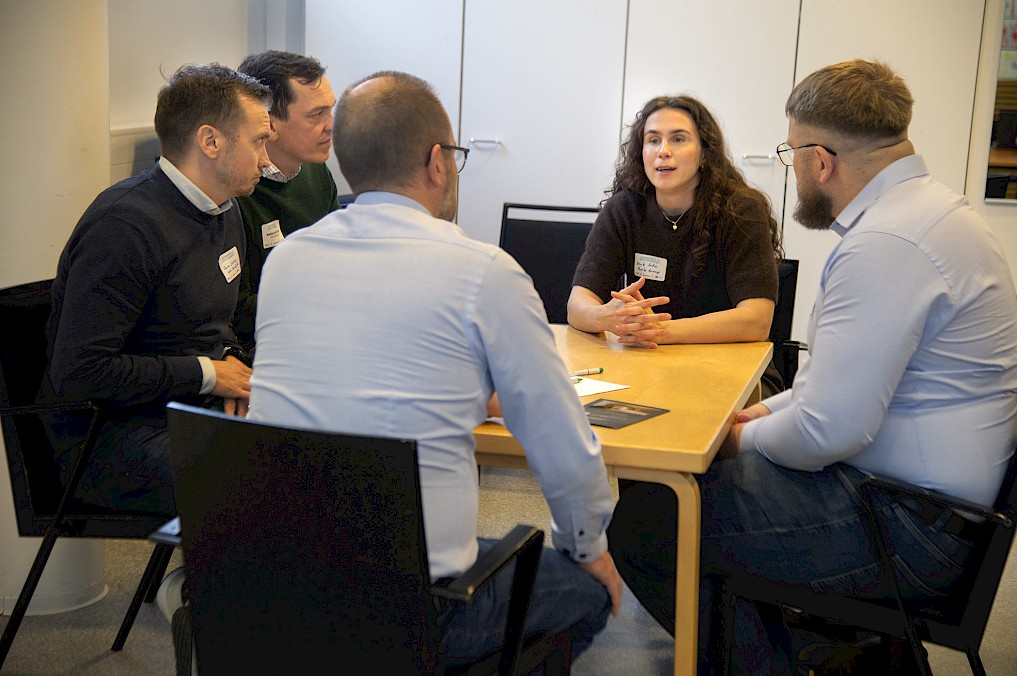
The ‘Subcontracting and Security of Supply’ networking event attracted participants from over 70 SMEs to Kaustinen.