How can local businesses get involved in major projects? Information sessions in Kaustinen and Veteli
On Wednesday 18 November, an ‘Entrepreneurs’ Coffee’ event was held at Restaurant Pelimanni in Kaustinen. In attendance were entrepreneurs from Kaustinen, as well as representatives from the local council and the ‘Kasvun Pilarit’ business group project. The topics covered current regional issues, such as major projects and how SMEs can get involved in them. The following morning, 19 November, at Hotel Kampeli in Veteli, presentations were given by Helios Nordic, which is developing a data centre project in Veteli, the KASE Parks project in the Kaustinen region, as well as the Kpedu education consortium and Osuva Training.
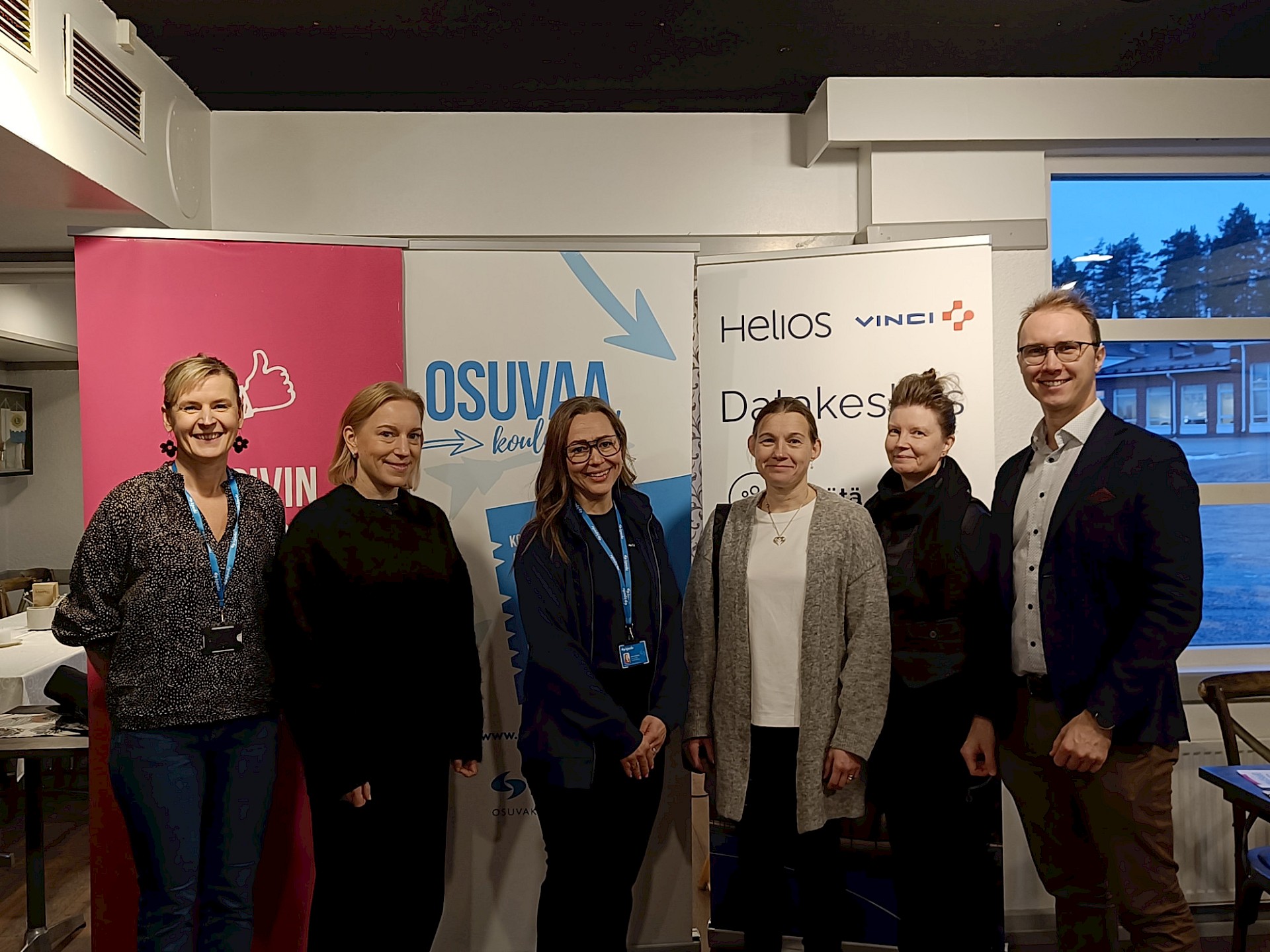
Local decision-makers had gathered to hear a progress update from the ‘Pillars of Growth’ project on major initiatives and clusters.
Clusters build capabilities and open doors directly to buyers
Even the strongest regional companies struggle to gain a foothold in the supply chains of major projects led by international design firms. Challenges include, for example, international FIDIC regulations, language skills, working practices, the required delivery capacity, and sufficient references. The ‘Pillars of Growth’ business cluster project, led by Markus Mäntynen, offers a solution to this complex set of problems.
Markus has created competitive business clusters from leading regional companies, both at national and international level. These clusters complement the capabilities of the companies and increase their capacity to meet the requirements of major projects such as those undertaken by Arctial and Patria. The capacity requirements of major projects – in the concrete sector, for example – are up to ten times greater than those of the largest projects undertaken by the major players to date.
Through these clusters, companies can jointly aim for delivery packages that require international-level reliability, capacity and the capability to supply more comprehensive sub-assemblies. There are three clusters: Concrete, Metal, and Office Buildings and HVAC. For example, the combined annual capacity of the companies in the Concrete Cluster is as high as 260,000 m³. Companies in the Metal Cluster, on the other hand, are required to comply with the NATO-compatible AQAP 2110 standard in order to enter the defence sector. In addition to this, defence sector clients may impose extremely strict confidentiality requirements, including their own audits, special certifications and physical security measures. Any contracts that may be concluded fall within the scope of business operations. The metal cluster is currently seeking subcontractors within its own networks for medium-heavy engineering work (CNC machining, etc.).
The ‘Pillars of Growth’ business group project is funded by the participating companies and the Regional Development Centres of Ostrobothnia, Central Ostrobothnia and Central Finland. The project brings together the strengths of leading companies operating across the three regions to ensure they have the necessary capabilities and capacity to offer their expertise to major projects currently in the planning stage. The funding is provided by the ten companies participating in the project, meaning that the ‘Pillars of Growth’ project does not utilise municipal funding. Furthermore, the project differs from municipally funded projects in that the funding companies are directly involved in planning the project’s activities. The project thus takes a B2B approach, prioritising market needs. The three business clusters established represent a total of 1,200 person-years of employment, and they have the potential to propel the region’s industrial companies towards even greater growth in the future.
Metalli Järvelä as part of the Metal Cluster
Of the ten funding companies, six are from the Kaustinen region. Metalli Järvelä is one of the companies from Kaustinen involved in the clusters. The cluster opens up new customer opportunities for Metalli Järvelä in sectors such as the defence and maritime industries. In addition, the ‘Pillars of Growth’ business group project trains companies in growth strategies and helps them tackle growth-related challenges directly in their day-to-day operations. The growth strategy set for Metalli Järvelä aims to double turnover over the next 5–10 years. This also places demands on the municipality and the local business community in terms of the availability of premises and town planning. To grow, the company needs more premises, funding and staff. According to Markus’s estimate, Kaustinen will need as many as 20–30 additional metalworkers if the Metal Cluster’s joint vision plans are realised. As regards the growth of Metalli Järvelä, this is a team effort involving the Kaustinen region, the municipality and the local business community. The region facilitates new investments, the municipality creates the practical framework for them, and the business community, together with the area’s cultural strengths, attract new workers and families to settle in the region.
There have already been concrete, positive experiences of local companies participating in major projects, such as Sibanye-Stillwater’s Keliber lithium project in Kaustinen and OX2’s wind power projects in Lestijärvi and Halsua.
Suurhanketoimisto Enabling local businesses to participate in major projects
Clusters create a direct link to the main contractor. The ‘ suurhanketoimisto.fi ’ service then acts as a local subcontracting resource for the shortlisted operators. For example, OX2 has provided work for over 50 local businesses in the Halsua projects alone. In the Keliberi project, companies in the region invoiced Keliberi directly for over 45 million euros. An open business register such as Suurhanketoimistois needed to meet the requirements of future major projects in the region, so that project managers for these large-scale projects can efficiently identify local businesses, whether they specialise in contracting or accommodation services.
How does a strong cultural identity relate to the region’s investment portfolio of nearly 11 billion?
The event also featured discussions on other projects in the region, totalling nearly 11 billion. Projects already completed amount to 1,500 million. The Kaustinen region has the greatest investment potential of all the regions in the Ostrobothnian provinces, and by far the highest level of investment per capita. This high demand is made possible by our electricity grid capacity, which is one of the best in the world. Clusters and the ‘ suurhanketoimisto.fi ’ initiative enable local businesses to get involved in major projects. In these respects, we are 3–4 years ahead of even large urban areas. So how does culture fit into this? Local culture is an important asset in fostering optimism and positivity. We need hope for the future to ensure our region remains attractive and to attract a skilled workforce to the area. Kaustinen has a very strong cultural identity, and we should be proud of this in a positive way. Cultural identity strengthens the region’s sense of hope, thereby supporting the local economy as people move to the area in search of work.
Data centre project brings opportunities to life
In Veteli, the potential of major projects became a reality when Helios Nordic presented the data centre project it is developing for the region. Aleksi Aalto, a project developer at Helios, gave a general overview of data centres and explained their staffing requirements. From the perspective of local businesses, a message was conveyed to Helios that the area already possesses the expertise required for construction and industrial services (Clusters). It is indeed important to make project developers aware of the local offering at an early stage of investment planning.
The KASE Parks project, for its part, helps local authorities prepare for future industrial investments. The work examines, amongst other things, infrastructure, energy flows, industrial synergies, skills requirements and the regions’ readiness to attract investment. Tomas Luoma, project manager for the KASE Parks project, was present.
A skilled workforce is needed at the right time
Major investments require not only supply chains but also a skilled workforce. Kpedu and Osuvakoulutus presented companies with opportunities to meet changing skills needs through, amongst other things, vocational training, apprenticeships, recruitment training and training programmes tailored to individual companies. Johanna Herrala, Apprenticeship Manager at Kpedu, and Henna Kantola, Managing Director of Osuvakoulutus, were in attendance.
It is advisable to address skills needs even before the construction phase of an investment begins. In this way, companies’ staff can be trained for future roles, whilst at the same time strengthening the region’s ability to meet the labour requirements of major projects. The good news for companies is that they do not need to be familiar with the training pathways themselves when making contact. All they need to do is describe their requirements to Kpedu or Osuvakoulutus, and these organisations will then, on the company’s behalf, determine the most appropriate way to proceed for each specific skills requirement.
Aleksi Aalto from Helios Nordic highlighted the language and security requirements for data centre projects. English language skills are required, but a basic level is sufficient. When it comes to security, data centres are extremely strict. The modern technology housed within the buildings and the data stored on the servers raise the security requirements, to which staff must commit.
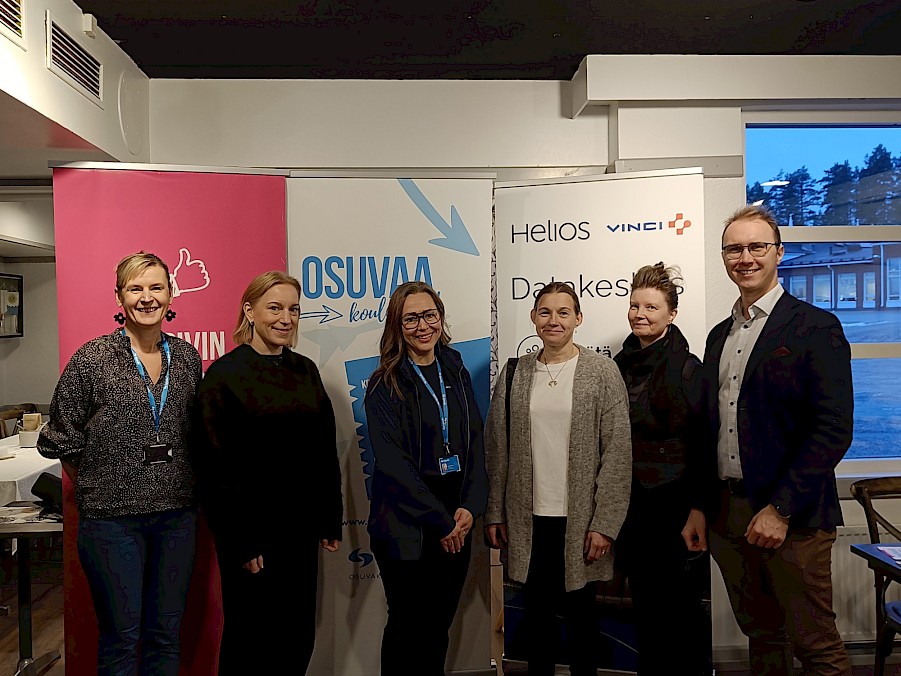
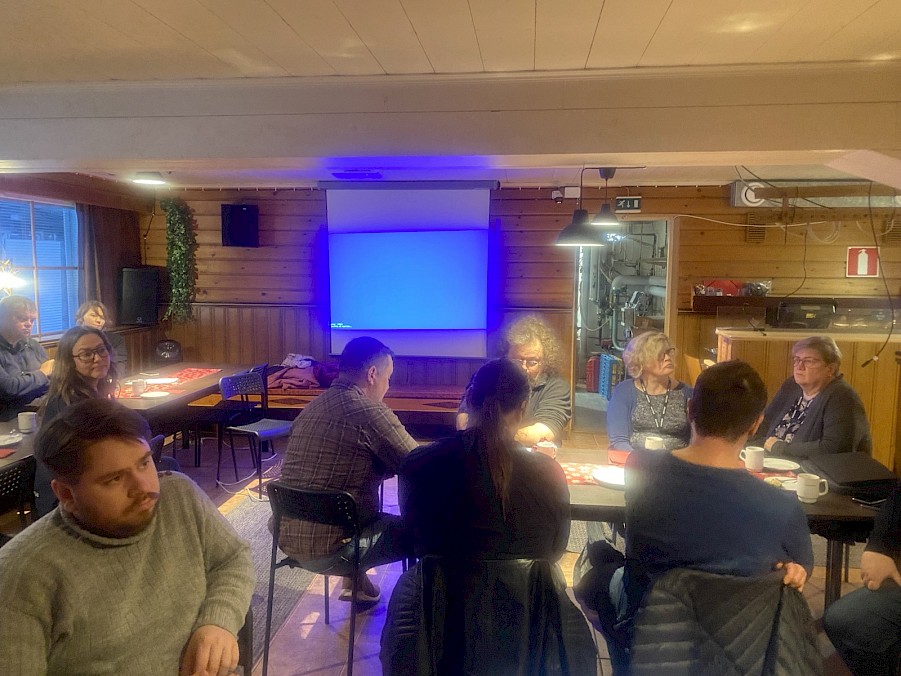
Representatives from Kpedu, Osuva Koulutus, the municipality of Veteli and Helios were responsible for organising the data centre information session held in Veteli.
Preparation is key
The common message from both events was clear: the regional economic benefits of major projects do not materialise automatically. Local businesses must get moving early enough, collaborate and develop their own expertise. At the same time, it is the task of the region’s education and development providers to ensure that the necessary skilled workers and training solutions are available as the investments progress.